


Trading in a car in Manitoba: how it works
How a qualifying trade-in can lower the tax on your next vehicle in Manitoba, what an appraiser looks at, and what to bring.

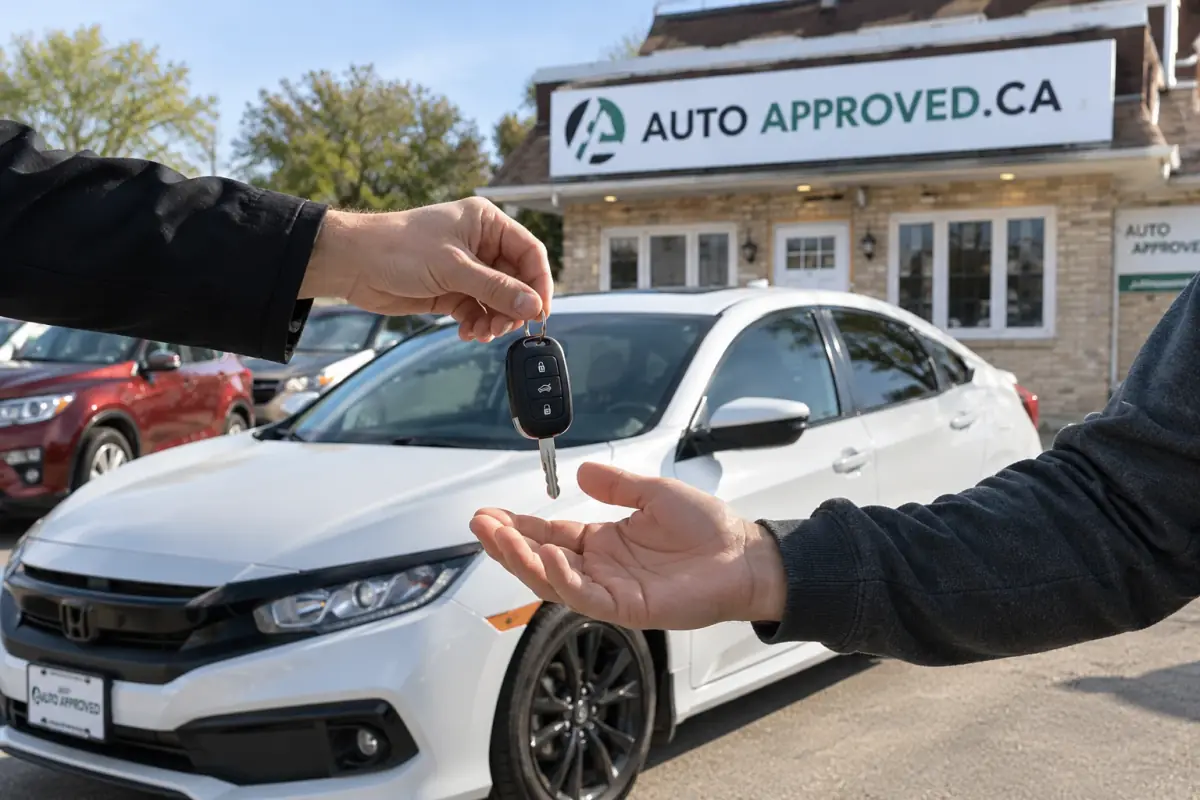
A trade-in means using the vehicle you own now as part of the payment for your next one. The dealer appraises your vehicle, makes an offer, and that amount comes off the price of the vehicle you are buying. Here is how the process works in Manitoba, including how a trade-in affects sales tax.
How a trade-in works
Bring the vehicle in during our business hours. You can call 204-781-9992 first if you prefer.
The vehicle is appraised. The appraiser looks at its condition and its history.
You receive an offer. The offer is the trade-in value.
The value is applied to your next vehicle. It reduces the price of the vehicle you choose, and the paperwork for both vehicles is done together.
How a trade-in affects the tax on your next vehicle
A vehicle bought from a dealer in Manitoba carries 7 per cent provincial retail sales tax (RST) and 5 per cent federal GST. When a qualifying trade-in is part of the purchase, both taxes are usually calculated on the price after the trade-in value is deducted.
Manitoba Public Insurance states that where a trade-in is involved, RST is based on the purchase price after deducting the value of the trade-in. Manitoba’s Retail Sales Tax Act sets the conditions: the vehicle traded in must be in Manitoba, of the same general kind as the one you are buying, and taken in by the dealer at the time of sale. The Act excludes some trade-ins, such as a vehicle registered for interjurisdictional commercial use on which Manitoba tax was not paid.
The Canada Revenue Agency applies the same approach to GST when a dealer accepts a trade-in from a person who does not have to charge GST, which is usually someone not registered for GST. All sources are listed at the end of this article.
An example with round numbers, assuming the trade-in qualifies for both the RST and GST deduction:
Vehicle price: $25,000
Trade-in value: $6,000
Amount taxed: $19,000
RST and GST combined (12 per cent): $2,280, compared with $3,000 on the full $25,000
In this example the trade-in lowers the tax by $720, on top of the $6,000 trade-in value itself. Your own figures will be different. Call us at (204) 781-9992 with questions about your purchase, and confirm the tax amounts on your bill of sale.
If you still owe money on your vehicle
A vehicle with a loan on it can usually still be traded in. The remaining balance, called the payout, has to be paid off as part of the transaction.
If the trade-in value is more than the payout, the difference goes toward your next vehicle.
If the payout is more than the trade-in value, the vehicle is worth less than you owe on it, which is called negative equity. How it is handled depends on the lender.
Bring a recent payout statement from your lender so the numbers are exact.
What an appraiser looks at
Year, make, model and trim.
Mileage.
Condition, inside and out, including tires and brakes.
Service records. Receipts show how the vehicle was maintained.
Accident history. A vehicle history report such as CARFAX Canada shows accident history and damage that has been reported to CARFAX Canada.
Local demand for that model at the time.
Cleaning the vehicle and gathering its records before the appraisal makes the review quicker.
What to bring
Vehicle registration
Driver’s licence
All keys and fobs
Service records, if you have them
Your lender’s name and a payout statement, if there is a loan on the vehicle
If you are also financing your next vehicle, the documents lenders ask for are in the document checklist.
Getting an appraisal
Start on the sell or trade page, browse our inventory, or call 204-781-9992. We are at 312 Nairn Ave in Winnipeg, open Monday to Friday 9 am to 6 pm and Saturday 9 am to 12 pm.
Sources
Manitoba: The Retail Sales Tax Act, C.C.S.M. c. R130, s. 2(9) to 2(9.2)
Financial Consumer Agency of Canada: Auto finance market trends (negative equity)
General information only, not financial, legal or tax advice. Lenders make the credit decisions on any financing, and rules, taxes and rates can change, so confirm the details for your own situation before acting.
Back to all articles
Related articles

Financing basics
19 October 2026
What credit score do you need for a car?
Each lender sets its own bar, and your score is one part of what they review. Here is how Canadian credit scores work and what else lenders look at.
Winter driving
13 October 2026
Winter tires in Manitoba: a 2026 guide
The switch is about temperature, not snow. Here is when it happens in Winnipeg, what the MPI Winter Tire Program covers, and what changed on October 1, 2026.

Bad credit car loans
18 September 2026
What lenders look at besides your score
Your credit score is only one part of a car loan application. Here is what else lenders may review, and how to keep your file moving.

Ready to see where you stand?
Ten short questions, then a call from the person who read them. No obligation, and nothing goes to a lender until you say so.
312 Nairn Ave, Winnipeg, MB R2L 0W9
Mon to Fri 9am to 6pm · Sat 9am to 12pm · Sun by appointment
(204) 781-9992