


Winter tires in Manitoba: a 2026 guide
The switch is about temperature, not snow. Here is when it happens in Winnipeg, what the MPI Winter Tire Program covers, and what changed on October 1, 2026.

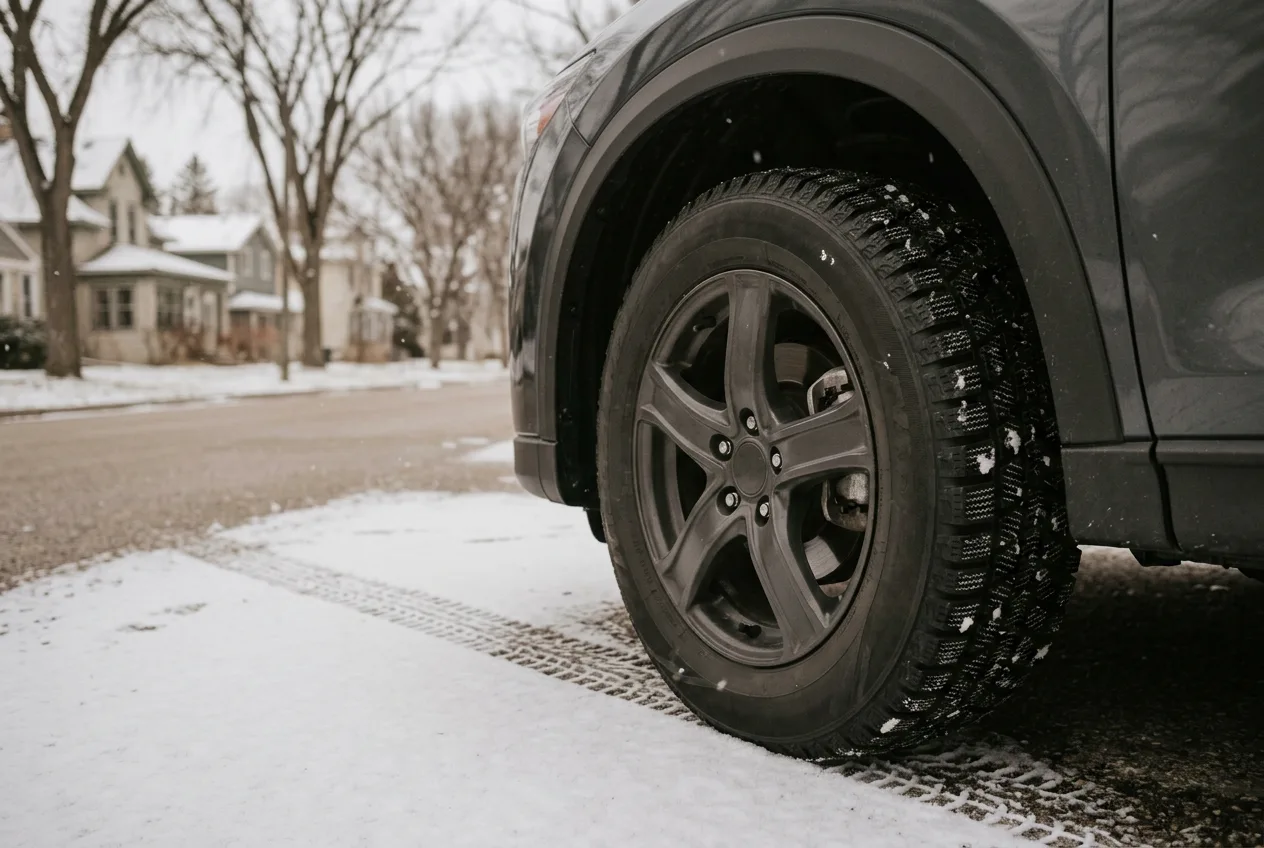
Most drivers in Winnipeg book their winter tire change after the first snowfall. The better signal is the thermometer. This guide covers when to switch, how winter, all-season and all-weather tires differ, how the MPI Winter Tire Program works this year, and what to check before the first cold morning.
Key takeaways
Switch when temperatures stay below 7°C. In Winnipeg that is usually early to mid October.
MPI finances up to $2,000 per vehicle for winter tires, at prime plus 2%, over one to four years.
As of October 1, 2026, all-weather tires no longer qualify for MPI financing, even with the mountain snowflake symbol.
Winter tires are not required by law in Manitoba.
When should you put winter tires on in Winnipeg?
Transport Canada’s guidance is that at temperatures below 7°C, all-season and summer tires begin to lose elasticity, which means less traction. The trigger is the temperature, not the snow.
Environment Canada’s climate normals for Winnipeg Richardson International Airport show how early that point arrives:
September: the average overnight low is already below 7°C.
October: the average daily temperature is about 5°C, and the average low is around freezing.
November: the average daily high is around 0°C.
In practice, the switchover window in Winnipeg is early to mid October. Booking then also means you are not waiting in line with everyone who calls after the first real snowfall.
Winter vs all-season vs all-weather tires: what’s the difference?
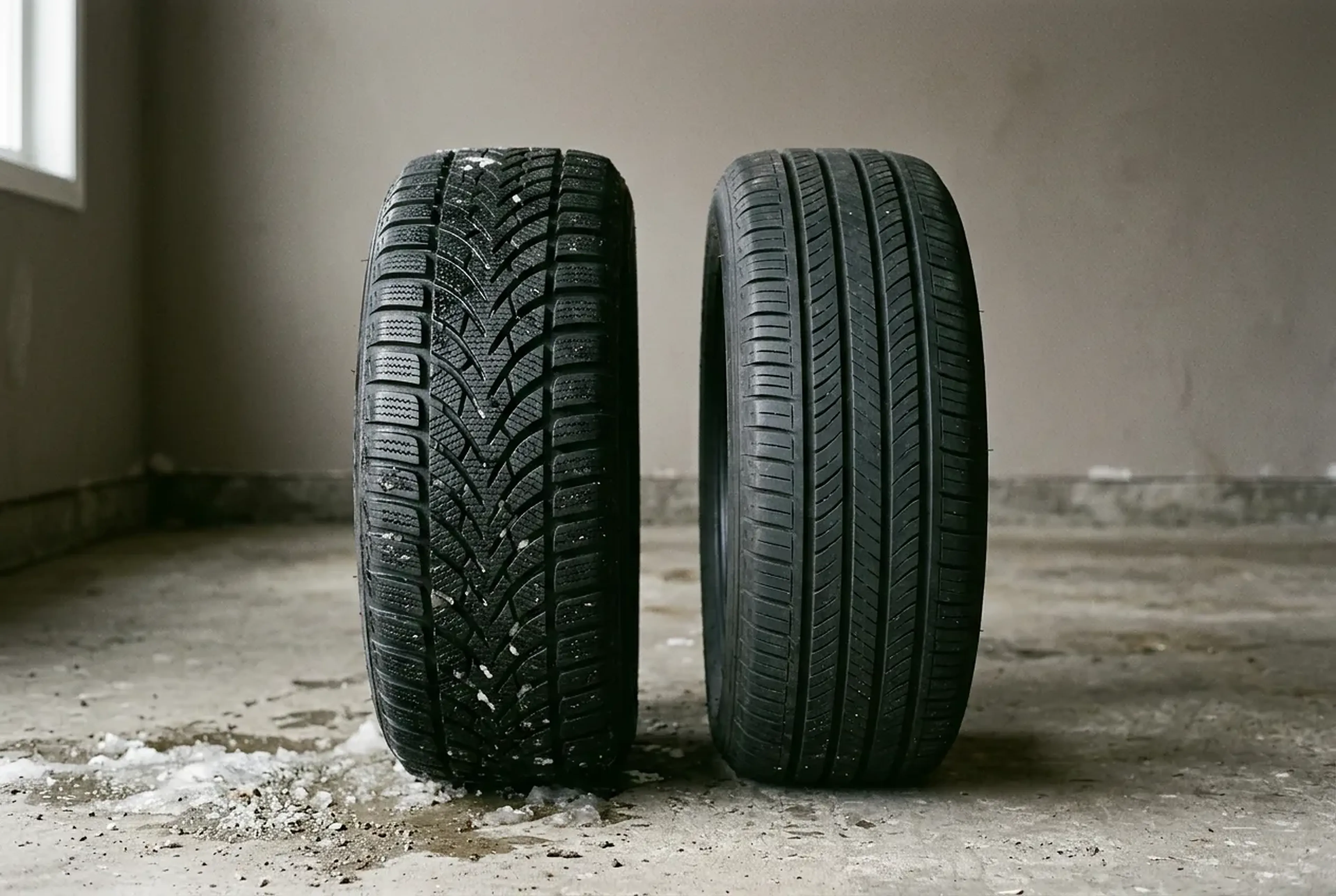
Left: a winter tread with deep grooves and many small slits. Right: an all-season tread with smoother ribs.
Winter tires
Winter tires use a rubber compound made to stay soft in the cold, with deeper tread and many small slits, called sipes, that bite into snow and ice. Transport Canada tells drivers to look for the peaked mountain with snowflake symbol on the sidewall when shopping for winter tires.
All-season tires
All-season tires are built for a range of conditions in milder climates. “All-season” is a product name, not a winter rating. Below 7°C the compound stiffens and grip drops.
All-weather tires
All-weather tires sit in between. Some carry the mountain snowflake symbol, but they are designed for year-round use. That difference now matters for MPI financing, covered below.
Whichever tire you choose, Transport Canada advises installing winter tires in sets of four, matched in type, size, speed rating and load index.
How does the MPI Winter Tire Program work in 2026?
Manitoba Public Insurance has run a financing program for winter tires since 2014. It has provided more than 287,000 loans worth over $387 million.
Amount: up to $2,000 per vehicle.
Interest: prime plus 2%. The rate follows the prime rate and can change.
Term: one to four years, repaid by automatic monthly withdrawal from your bank account.
What the loan covers
The program covers more than the tires themselves:
Approved winter tires and rims
Mounting, balancing and alignment
Tire pressure monitoring systems
Studding (some limits apply)
Storage or the seasonal switchover, if included in the initial purchase
Nitrogen fill, valve stems, shop supplies, and applicable taxes and fees
Tire repair is not covered.
Who is eligible, and how do you apply?
To qualify, you need to:
Be an individual MPI customer (not a corporate one)
Own a passenger vehicle or light truck registered in your name
Have no outstanding MPI payments or restrictions
To apply, visit a participating retailer, choose your tires, and bring your driver’s licence and vehicle registration. The retailer confirms eligibility and completes the loan setup.
Do all-weather tires still qualify for the MPI program?
No. As of October 1, 2026, eligible tires must display the Three Peak Mountain Snowflake symbol and be designed and marketed solely for winter driving, including snow and ice. Tires marketed as all-weather, all-season, four-season or year-round are excluded, even if they carry the symbol.
MPI says winter tires reduce collisions by 6.3 per cent.
Are winter tires mandatory in Manitoba?
No. Manitoba has no winter tire law. Quebec requires vehicles to be winter-ready from December 1 to March 15. British Columbia requires winter tires or chains on most designated routes from October 1 to April 30, and on some routes until March 31.
How do you check tire pressure and tread in the cold?
Pressure. Tire pressure drops in the cold. Transport Canada notes that a tire with good pressure in a warm garage will be under-inflated when it is below zero outside, so check pressure when the tires are cold, and check often, especially before highway trips. Use the pressure listed in your owner’s manual or on the door frame, and never exceed the maximum printed on the sidewall.
Tread. Transport Canada advises against using tires with less than 4 mm of tread depth.
Age. The tire identification number on the sidewall ends in four digits that show the week and year the tire was made. For example, 4223 means the 42nd week of 2023.
What to check on a vehicle before its first Manitoba winter
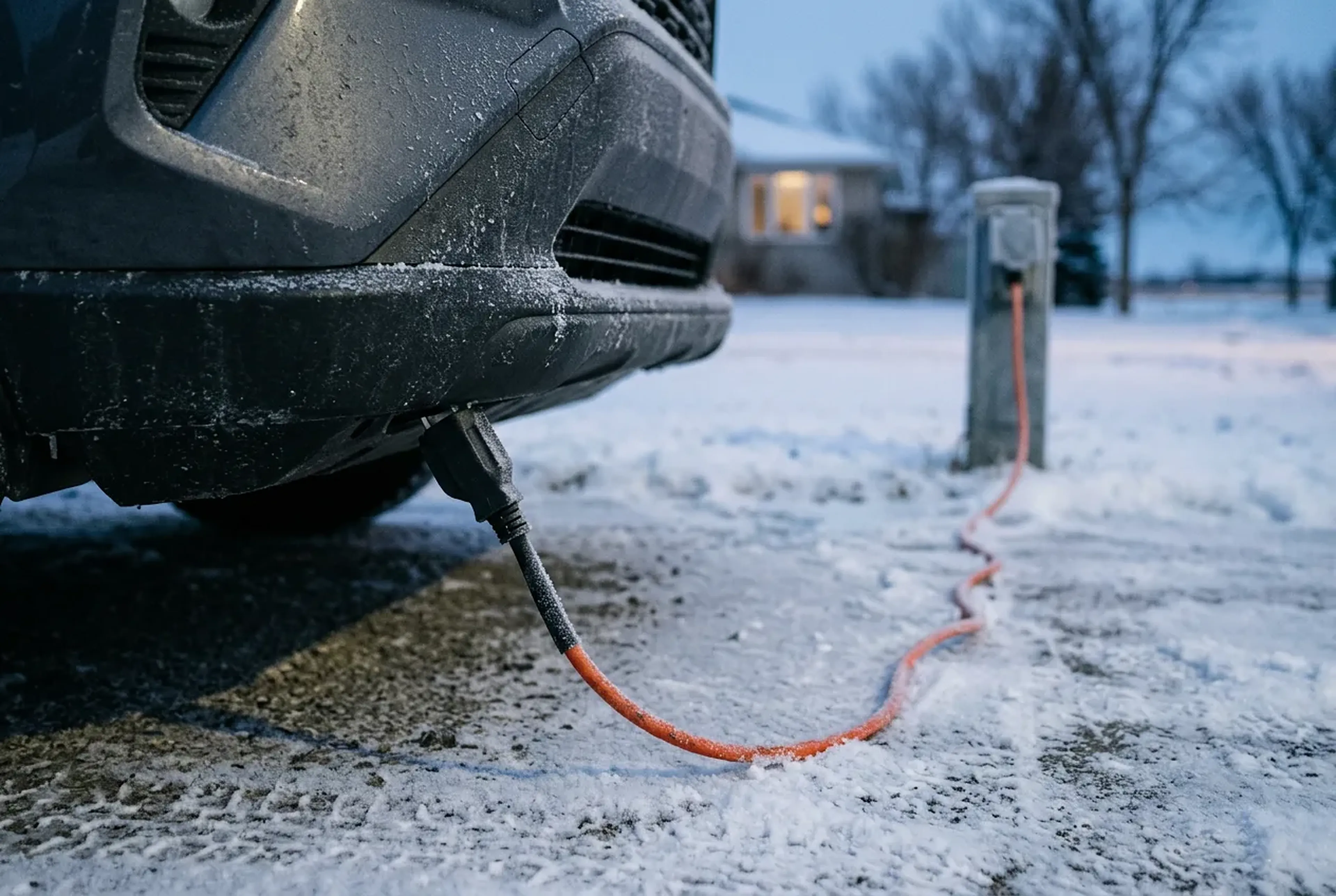
Tires are one part of winter readiness. The rest of the list is worth running through at the same time:
Battery. Cold reduces the power a battery can deliver. A shop can test it quickly.
Block heater. Check that the cord is intact and the heater works before the first cold morning.
Tires. Look for the mountain snowflake symbol, at least 4 mm of tread, and the date code.
Washer fluid. Switch to a fluid rated well below freezing.
Wipers and lights. Both matter more when it is dark before 5 pm.
Undercarriage and brake lines. Road salt speeds up rust on the underside of a vehicle.
Shopping for a vehicle before winter? Every vehicle on our lot is certified and inspected, and a CARFAX Canada report is available for each one. You can see what’s on the lot right now. If you plan to finance, here are the documents you need to finance a car in Manitoba, and you can start your application online.
Frequently asked questions
Do I need winter tires if I have all-wheel drive?
All-wheel drive helps a vehicle accelerate. Braking and cornering grip come from the tires, and the 7°C guidance applies regardless of how many wheels are driven.
Can I put winter tires on only two wheels?
Transport Canada advises installing winter tires in sets of four, matched in type, size, speed rating and load index.
Does the MPI program cover studded tires?
Studding is listed as a covered cost, with some limits. Ask the participating retailer what applies to your purchase.
Sources
Government of British Columbia: Designated winter tire and chain routes
Justice Laws Website: Motor Vehicle Tire Safety Regulations (SOR/2013-198), section 6
This article is general information, current as of October 2026. Program terms are set by Manitoba Public Insurance and can change, so check mpi.mb.ca for the latest details.
Back to all articles
Related articles
Trading in
18 September 2026
Trading in a car in Manitoba: how it works
How a trade-in lowers the tax on your next vehicle in Manitoba, what an appraiser looks at, and what to bring.

Bad credit car loans
18 September 2026
Bad credit car loans in Winnipeg: what lenders actually look at
Most people open with their credit score. Lenders start somewhere else. Here is the order they really work through, and what slows a file down.

Financing basics
18 September 2026
The documents you need to finance a car in Manitoba
Five items cover almost every application. Here is what each one proves, what to use if you do not have it, and the one thing dealers owe you at delivery.
Ready to see where you stand?
Ten short questions, then a call from the person who read them. No obligation, and nothing goes to a lender until you say so.
312 Nairn Ave, Winnipeg, MB R2L 0W9
Mon to Fri 9am to 6pm · Sat 9am to 12pm · Sun by appointment
(204) 781-9992